






Kundenlogin
Wenn Sie noch kein Kundenkonto haben, können Sie sich hier registrieren. Sollten Sie Ihr Passwort vergessen haben, können Sie hier ein neues Passwort anfordern.
Wenn Sie noch kein Kundenkonto haben, können Sie sich hier registrieren. Sollten Sie Ihr Passwort vergessen haben, können Sie hier ein neues Passwort anfordern.
 Neu im Angebot
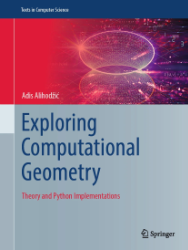
Alihodzic, Adis
Exploring Computational Geometry
Theory and Python Implementations. Computational geometry plays a vital role in fields ranging from algorithms, data structures, robotics, and computer graphics to geographic information systems and AI. Providing a comprehensive toolkit, this core textbook constructs a strong bridge between rigorous geometric theory and practical, real-world implementations - making complex concepts accessible and engaging. Uniquely, the volume presents a modern approach to computational geometry through the lens of Python programming. Emphasizing clarity, structure, and visualization, the book introduces core geometric structures and algorithms, supported by detailed illustrations and interactive examples. With its project-based learning orientation and emphasis on conceptual understanding, it can serve as both a textbook and a reference guide for those exploring the computational side of geometry. XXXV,425 Seiten mit 65 Farb- und 156 s/w-Abb., gebunden (Texts in Computer Science/Springer Nature 2026) leichte Lagerspuren/unused, minor shelfwear
Bestell-Nr.: 135579
ISBN-13: 9783032063922
ISBN-10: 3032063922
Erscheinungsjahr: 2026
ISBN-13: 9783032063922
ISBN-10: 3032063922
Erscheinungsjahr: 2026
Bindungsart: gebunden
Umfang: XXXV,425 Seiten mit 65 Farb- und 156 s/w-Abb.
Gewicht: 1,47 kg
Verlag: Springer Nature
Umfang: XXXV,425 Seiten mit 65 Farb- und 156 s/w-Abb.
Gewicht: 1,47 kg
Verlag: Springer Nature
Reihe: Texts in Computer Science
Autor*in: Adis Alihodžić
Sprache: Englisch
Zustand: Wie neu, leichte Lagerspuren/unused, minor shelfwear
Autor*in: Adis Alihodžić
Sprache: Englisch
Zustand: Wie neu, leichte Lagerspuren/unused, minor shelfwear
Vorheriges Buch Zum Sachgebiet 'Mathematik' Nächstes Buch
Weitere Bücher im Sachgebiet »Mathematik«
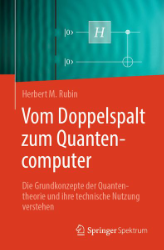
Rubin, Herbert M.
Vom Doppelspalt zum Quantencomputer
Die Grundkonzepte der Quantentheorie und ihre technische Nutzung verstehen
Vom Doppelspalt zum Quantencomputer
Die Grundkonzepte der Quantentheorie und ihre technische Nutzung verstehen
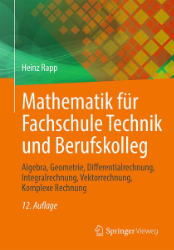
Rapp, Heinz
Mathematik für Fachschule Technik und Berufskolleg
Algebra, Geometrie, Differentialrechnung, Integralrechnung, Vektorrechnung, …
Mathematik für Fachschule Technik und Berufskolleg
Algebra, Geometrie, Differentialrechnung, Integralrechnung, Vektorrechnung, …
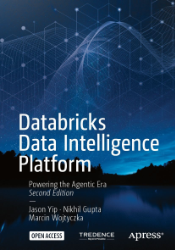
Yip, Jason/Nikhil Gupta/Marcin Wojtyczka
Databricks Data Intelligence Platform
Powering the Agentic Era. Second Edition
Databricks Data Intelligence Platform
Powering the Agentic Era. Second Edition
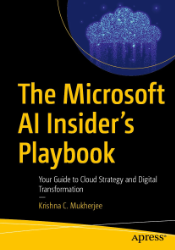
Mukherjee, Krishna C.
The Microsoft AI Insider's Playbook
Your Guide to Cloud Strategy and Digital Transformation
The Microsoft AI Insider's Playbook
Your Guide to Cloud Strategy and Digital Transformation
Folmer Hansen, Peter
Master Data Governance Framework
A Practitioner's Guide to Master Data, Systems, and Organization
Master Data Governance Framework
A Practitioner's Guide to Master Data, Systems, and Organization

Junk, Michael/Jan-Hendrik Treude
Beweisen lernen Schritt für Schritt
für einen gelungenen Einstieg ins Mathestudium
Beweisen lernen Schritt für Schritt
für einen gelungenen Einstieg ins Mathestudium


Bolzano, Bernard
Gesamtausgabe Band II B 3.1: Miscellanea Mathematica 3
1812-1813 = Miscellanea Mathematica, Heft 3: MM 211-308
Gesamtausgabe Band II B 3.1: Miscellanea Mathematica 3
1812-1813 = Miscellanea Mathematica, Heft 3: MM 211-308

Bolzano, Bernard
Gesamtausgabe Band II B 12.1: Miscellanea Mathematica 21
1826-1830 = Miscellanea Mathematica, Heft 21: MM 1821-1912
Gesamtausgabe Band II B 12.1: Miscellanea Mathematica 21
1826-1830 = Miscellanea Mathematica, Heft 21: MM 1821-1912