

Kundenlogin
Wenn Sie noch kein Kundenkonto haben, können Sie sich hier registrieren. Sollten Sie Ihr Passwort vergessen haben, können Sie hier ein neues Passwort anfordern.
Wenn Sie noch kein Kundenkonto haben, können Sie sich hier registrieren. Sollten Sie Ihr Passwort vergessen haben, können Sie hier ein neues Passwort anfordern.
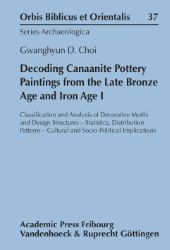
Choi, Gwanghyun D.
Decoding Canaanite Pottery Paintings from the late Bronze Age and Iron Age I
Classification and Analysis of Decorative Motifs and Design Structures - Statistics, Distribution Patterns - Cultural and Socio-Political Implications. A systematic study of motifs found on Canaanite pottery. - This book presents a systematic study of the decorative motifs and designs found on painted Canaanite pottery vessels excavated in Palestine and dating to the Late Bronze Age and Iron Age I. The study is based on an analysis of 3,225 painted vessels and sherds. One of its most important goals is to provide a taxonomy of the decorative motifs and designs found on the vessels. To achieve this goal, each of the motifs and designs is carefully described and codified as a unit within a system of classification grouping them into categories, sub-categories, classes, types, and sub-types. Based on this classification system, statistical figures representing the frequency of occurrence of the decorative motifs and designs are produced. The degree of popularity and the temporal or spatial distribution of each of the motifs and designs are thus clarified. Based on the statistical analysis, tree iconography (representing particularly the date-palm, often called “tree of life”) was confirmed to be the most prominent and representative feature of the Canaanite pottery painting tradition. The motif most commonly found on handles and best known as “Union Jack” mark is demonstrated to be a schematized representation of the date-palm. Canaanite tree iconography was probably associated with a fertility cult, but there is no direct evidence associating it with the goddess Asherah. The cultural origins of painted pottery traditions, colors used for decoration, archaeological contexts where the decorative motifs come from and their socio-political meanings are also considered in detail. Although during the Late Bronze and Iron IA ages the inhabitants of Canaan were politically controlled by New Kingdom Egypt, Egyptian influence on their pottery painting tradition was insignificant. Western Asiatic features prevail much more in the main motifs and design elements, their iconography, design, and style. The archaeological contexts of painted Canaanite vessels indicate that the decorative motifs reveal the Canaanites’ desire for blessing in present life rather than in the afterlife. The rise and decline of the painted pottery phenomenon is most likely associated with socio-political changes. The Canaanite pottery painting tradition declined notably in the 11th century BCE, following the end of Egyptian rule in Canaan. In the 10th century BCE, tradition virtually disappeared, indicating the rise of a new socio-political order in Canaan. XI,272 Seiten mit zahlreichen Abb. sowie eine CD-ROM als Beilage, Großformat, gebunden (Orbis Biblicus et Orientalis. Series Archaeologica; Vol. 37/Academic Press Fribourg/Vandenhoeck & Ruprecht 2016) leichte Lagerspuren, deutlich bestoßen, Mängelexemplarstempel auf Schnitt/unused, minor shelfwear, clearly bumped, remainder mark stamp on edge
Bestell-Nr.: 132864
ISBN-13: 9783525530399 / 9783
ISBN-10: 3525530390 / 3727818
Erscheinungsjahr: 2016
Format: Großformat
ISBN-13: 9783525530399 / 9783
ISBN-10: 3525530390 / 3727818
Erscheinungsjahr: 2016
Format: Großformat
Bindungsart: gebunden
Umfang: XI,272 Seiten mit zahlreichen Abb. sowie eine CD-ROM als Beilage
Gewicht: 1,32 kg
Verlage: Academic Press Fribourg, Vandenhoeck & Ruprecht
Reihe: Orbis Biblicus et Orientalis. Series Archaeologica
Umfang: XI,272 Seiten mit zahlreichen Abb. sowie eine CD-ROM als Beilage
Gewicht: 1,32 kg
Verlage: Academic Press Fribourg, Vandenhoeck & Ruprecht
Reihe: Orbis Biblicus et Orientalis. Series Archaeologica
Autor*in: Gwanghyun D. Choi
Sprache: Englisch
Zustand: Sehr gut, leichte Lagerspuren, deutlich bestoßen, Mängelexemplarstempel auf Schnitt/unused, minor shelfwear, clearly bumped, remainder mark stamp on edge
Sprache: Englisch
Zustand: Sehr gut, leichte Lagerspuren, deutlich bestoßen, Mängelexemplarstempel auf Schnitt/unused, minor shelfwear, clearly bumped, remainder mark stamp on edge
Vorheriges Buch Zum Sachgebiet 'Biblische Archäologie' Nächstes Buch
Weitere Bücher im Sachgebiet »Biblische Archäologie«


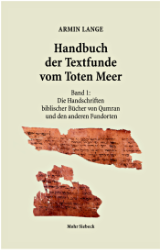
Lange, Armin
Handbuch der Textfunde vom Toten Meer. Band 1
Band 1: Die Handschriften biblischer Bücher von Qumran und den anderen Fundorten …
Handbuch der Textfunde vom Toten Meer. Band 1
Band 1: Die Handschriften biblischer Bücher von Qumran und den anderen Fundorten …
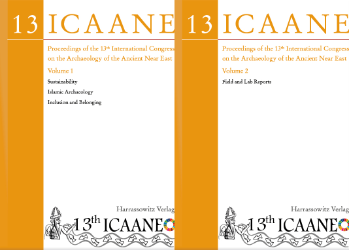
13 ICAANE - Proceedings of the 13th International Congress on the Archaeology of the Ancient Near East. Vol. 1+2
22-26 May 2023, Copenhagen. Volume 1: Sustainability; Islamic Archaeology; Inclusion …
22-26 May 2023, Copenhagen. Volume 1: Sustainability; Islamic Archaeology; Inclusion …
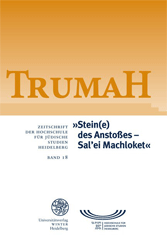
»Stein(e) des Anstoßes - Sal'ei Machloket«
Intentionen und ideologische Implikationen der aktuellen archäologischen Forschung …
Intentionen und ideologische Implikationen der aktuellen archäologischen Forschung …
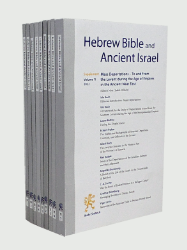
HeBAI - Hebrew Bible and Ancient Israel. Vol. 10 & 11 (2021/2022)
Neun Ausgaben: Zwei vollständige Jahrgänge plus Supplement
Neun Ausgaben: Zwei vollständige Jahrgänge plus Supplement