Kundenlogin
Wenn Sie noch kein Kundenkonto haben, können Sie sich hier registrieren. Sollten Sie Ihr Passwort vergessen haben, können Sie hier ein neues Passwort anfordern.
Wenn Sie noch kein Kundenkonto haben, können Sie sich hier registrieren. Sollten Sie Ihr Passwort vergessen haben, können Sie hier ein neues Passwort anfordern.
Neu im Angebot
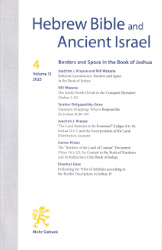
About the Issues: Issue 1: Jerusalem is usually seen as important and holy, a symbol of a sacred place. But was it always so? Can research reveal fluctuations in the city's status? Can we identify the moment Jerusalem became a political and religious center? Can we differentiate between moments when it really was grand and moments when the grandeur of the city was only idealized? Seven Essays shed light on these questions. Contents: Nitsan Shalom/Yuval Gadot: Jerusalem in Transition - Decisive Moments in the Creation of Jerusalem in Reality and as a Myth. Editorial Introduction. - Helena Roth: The Head of All Those Villages. The Urban Nature of Jerusalem during the Middle Bronze Age Reconsidered. - Israel Finkelstein: Jerusalem And Empires. Long Term Observations. - Tehillah Lieberman: Make Jerusalem Great Again. The Role of Alexander Jannaeus in Shaping the Hasmonean Capital City. - Oded Lipschits: Jerusalem as a Symbol and in Reality. - Nitsan Shalom: The Babylonian Destruction of Jerusalem as a Symbol? New Archaeological Evidence of the Babylonian Conquest. - Liora Freud/Yiftah Shalev: Continuity and Change in 6th-4th Century BCE Jerusalem. - Yuval Gadot/Joe Uziel: Jerusalem in History. The Hard and Life Sciences Perspective. -- Issue 2: Four articles show Egypt’s importance for the biblical world. They present new documents from Egypt in Persian and Hellenistic times which are of interest to biblical scholars and/or re-examine the geographical and social location of known Judean texts, arguing that they were produced in Egypt. Contents: Sylvie Honigman/Anne Fitzpatrick-McKinley: Judeans in Persian and Hellenistic Egypt - Social Settings and Literary Productions. Editorial Introduction. - Tawny Holm: The Wandering Arameans in Egypt. Papyrus Amherst 63. - Siegfried Kreuzer: Jewish Life in Egypt in the Light of the Herakleopolis Papyri (With a Translation of the Papyri). - Sylvie Honigman: The Social Integration of Judeans in Ptolemaic Egypt and the Egyptian Influences on their Literary Production. - Anne Fitzpatrick-McKinley: Some Cultural Influences in the Judean-Egyptian Book of Judith. -- Issue 3: Six essays on Job and epistemology unite different but related biblical and philosophical interests mingle in conjunction with each contributor’s own interests and research expertise as first and foremost biblical scholars. Contents: Jan Dietrich/Jaco Gericke: Epistemology and the Book of Job. Editorial Introduction. - Jaco Gericke: Job's First-Person Knowledge Claims and the Epistemology of Religious Disagreement. - Jan Dietrich: Modes of Argumentation. The Epistemology of Arguments in the Book of Job. - Katharine J. Dell: Representing Tradition. Exploring the Epistemology of the Friends in the Book of Job. - Annette Schellenberg-Lagler: Reflections on the Limitations of Cognition in the Book of Job. - Thomas Wagner: Job as the Sufferer. Self-Knowledge under the Influence of Permanent Pain. - Mark Sneed: Epistemological Transcendence (the Sublime) as a Rhetorical Device in the Second Divine Speech. -- Issue 4: Taken together, five papers make it clear that issues of borders, space, and land in general serve to determine larger questions of authorial intent in, and literary history of, the book of Joshua. Contents: Joachim J. Krause and Nili Wazana: Editorial Introduction: Borders and Space in the Book of Joshua. - Nili Wazana: The South-North Divide in the Conquest Narrative (Joshua 1-12). - Ya'akov Dolgopolsky-Geva: Toponym Dropping. Who is Responsible for Joshua 10:28–39? - Joachim J. Krause: "The Land Remains to be Possessed". Judges 2:6-10, Joshua 13:1-7, and the Incorporation of the Land Distribution Account. - Itamar Kislev: The "Borders of the Land of Canaan" Document (Num 34:1-12). Its Context in the Book of Numbers and Its Reflection in the Book of Joshua. - Erasmus Gass: Evaluating the Tribe of Zebulon according to the Border Description in Joshua 19. - Die Zeitschrift "HeBAI - Hebrew Bible and Ancient Israel" hat die Hebräische Bibel und ihre historischen Kontexte, die Geschichte Israels sowie die entsprechenden methodologischen Fragen zum Thema. Sie beleuchtet historische Fragen zum antiken Israel, literarische und literargeschichtliche Fragen zur Hebräischen Bibel sowie Fragen ihrer Entwicklung und Rezeption in der Zeit des Zweiten Tempels, diskutiert aber auch methodologische Fragestellungen, wie etwa das Verhältnis von Archäologie und Text, Konnotationen antiker Geschichtsschreibung, komparative Perspektiven oder Fragen sozialgeschichtlicher Interpretationen. Durch diese Kombination der disziplinären, methodischen und kulturellen Breite mit einem thematischen Fokus wird in jedem Themenheft der aktuelle Forschungsstand von renommierten Forscher:innen vorgestellt und diskutiert, um die Forschung in diesen Gebieten voranzubringen. Vollständiger Jahrgang in vier Heften, zus. V,437 Seiten, broschiert (HeBAI - Hebrew Bible and Ancient Israel; Vol. 12 (2023), Issue 1-4/Mohr Siebeck 2023) leichte Lagerspuren/minor shelfwear
HeBAI - Hebrew Bible and Ancient Israel. Vol. 12 (2023)
Edited by Oded Lipschits, Sara Milstein, Konrad Schmid, and Jakob Wöhrle. Issue 1: Jerusalem in Transition - Decisive Moments in the Creation of Jerusalem in Reality and as a Myth. Issue 2: Judeans in Persian and Hellenistic Egypt - Social Settings and Literary Productions. Issue 3: Epistemology and the Book of Job. Issue 4: Borders and Space in the Book of Joshua.About the Issues: Issue 1: Jerusalem is usually seen as important and holy, a symbol of a sacred place. But was it always so? Can research reveal fluctuations in the city's status? Can we identify the moment Jerusalem became a political and religious center? Can we differentiate between moments when it really was grand and moments when the grandeur of the city was only idealized? Seven Essays shed light on these questions. Contents: Nitsan Shalom/Yuval Gadot: Jerusalem in Transition - Decisive Moments in the Creation of Jerusalem in Reality and as a Myth. Editorial Introduction. - Helena Roth: The Head of All Those Villages. The Urban Nature of Jerusalem during the Middle Bronze Age Reconsidered. - Israel Finkelstein: Jerusalem And Empires. Long Term Observations. - Tehillah Lieberman: Make Jerusalem Great Again. The Role of Alexander Jannaeus in Shaping the Hasmonean Capital City. - Oded Lipschits: Jerusalem as a Symbol and in Reality. - Nitsan Shalom: The Babylonian Destruction of Jerusalem as a Symbol? New Archaeological Evidence of the Babylonian Conquest. - Liora Freud/Yiftah Shalev: Continuity and Change in 6th-4th Century BCE Jerusalem. - Yuval Gadot/Joe Uziel: Jerusalem in History. The Hard and Life Sciences Perspective. -- Issue 2: Four articles show Egypt’s importance for the biblical world. They present new documents from Egypt in Persian and Hellenistic times which are of interest to biblical scholars and/or re-examine the geographical and social location of known Judean texts, arguing that they were produced in Egypt. Contents: Sylvie Honigman/Anne Fitzpatrick-McKinley: Judeans in Persian and Hellenistic Egypt - Social Settings and Literary Productions. Editorial Introduction. - Tawny Holm: The Wandering Arameans in Egypt. Papyrus Amherst 63. - Siegfried Kreuzer: Jewish Life in Egypt in the Light of the Herakleopolis Papyri (With a Translation of the Papyri). - Sylvie Honigman: The Social Integration of Judeans in Ptolemaic Egypt and the Egyptian Influences on their Literary Production. - Anne Fitzpatrick-McKinley: Some Cultural Influences in the Judean-Egyptian Book of Judith. -- Issue 3: Six essays on Job and epistemology unite different but related biblical and philosophical interests mingle in conjunction with each contributor’s own interests and research expertise as first and foremost biblical scholars. Contents: Jan Dietrich/Jaco Gericke: Epistemology and the Book of Job. Editorial Introduction. - Jaco Gericke: Job's First-Person Knowledge Claims and the Epistemology of Religious Disagreement. - Jan Dietrich: Modes of Argumentation. The Epistemology of Arguments in the Book of Job. - Katharine J. Dell: Representing Tradition. Exploring the Epistemology of the Friends in the Book of Job. - Annette Schellenberg-Lagler: Reflections on the Limitations of Cognition in the Book of Job. - Thomas Wagner: Job as the Sufferer. Self-Knowledge under the Influence of Permanent Pain. - Mark Sneed: Epistemological Transcendence (the Sublime) as a Rhetorical Device in the Second Divine Speech. -- Issue 4: Taken together, five papers make it clear that issues of borders, space, and land in general serve to determine larger questions of authorial intent in, and literary history of, the book of Joshua. Contents: Joachim J. Krause and Nili Wazana: Editorial Introduction: Borders and Space in the Book of Joshua. - Nili Wazana: The South-North Divide in the Conquest Narrative (Joshua 1-12). - Ya'akov Dolgopolsky-Geva: Toponym Dropping. Who is Responsible for Joshua 10:28–39? - Joachim J. Krause: "The Land Remains to be Possessed". Judges 2:6-10, Joshua 13:1-7, and the Incorporation of the Land Distribution Account. - Itamar Kislev: The "Borders of the Land of Canaan" Document (Num 34:1-12). Its Context in the Book of Numbers and Its Reflection in the Book of Joshua. - Erasmus Gass: Evaluating the Tribe of Zebulon according to the Border Description in Joshua 19. - Die Zeitschrift "HeBAI - Hebrew Bible and Ancient Israel" hat die Hebräische Bibel und ihre historischen Kontexte, die Geschichte Israels sowie die entsprechenden methodologischen Fragen zum Thema. Sie beleuchtet historische Fragen zum antiken Israel, literarische und literargeschichtliche Fragen zur Hebräischen Bibel sowie Fragen ihrer Entwicklung und Rezeption in der Zeit des Zweiten Tempels, diskutiert aber auch methodologische Fragestellungen, wie etwa das Verhältnis von Archäologie und Text, Konnotationen antiker Geschichtsschreibung, komparative Perspektiven oder Fragen sozialgeschichtlicher Interpretationen. Durch diese Kombination der disziplinären, methodischen und kulturellen Breite mit einem thematischen Fokus wird in jedem Themenheft der aktuelle Forschungsstand von renommierten Forscher:innen vorgestellt und diskutiert, um die Forschung in diesen Gebieten voranzubringen. Vollständiger Jahrgang in vier Heften, zus. V,437 Seiten, broschiert (HeBAI - Hebrew Bible and Ancient Israel; Vol. 12 (2023), Issue 1-4/Mohr Siebeck 2023) leichte Lagerspuren/minor shelfwear
Bestell-Nr.: 134152
Erscheinungsjahr: 2023
Bände: 4
Bindungsart: broschiert
Erscheinungsjahr: 2023
Bände: 4
Bindungsart: broschiert
Umfang: V,437 Seiten
Gewicht: 659 g
Verlag: Mohr Siebeck
Reihe: HeBAI - Hebrew Bible and Ancient Israel
Gewicht: 659 g
Verlag: Mohr Siebeck
Reihe: HeBAI - Hebrew Bible and Ancient Israel
Herausgeber*innen: Jakob Wöhrle, Konrad Schmid, Oded Lipschits, Sara Milstein
Sprache: Englisch
Zustand: Wie neu, leichte Lagerspuren/minor shelfwear
Sprache: Englisch
Zustand: Wie neu, leichte Lagerspuren/minor shelfwear
Vorheriges Buch Zum Sachgebiet 'Antikes Judentum' Nächstes Buch
Weitere Bücher der Reihe »HeBAI - Hebrew Bible and Ancient Israel«
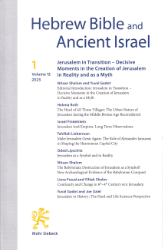


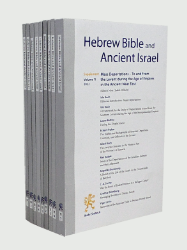
HeBAI - Hebrew Bible and Ancient Israel. Vol. 10 & 11 (2021/2022)
Neun Ausgaben: Zwei vollständige Jahrgänge plus Supplement
Neun Ausgaben: Zwei vollständige Jahrgänge plus Supplement
Weitere Bücher im Sachgebiet »Antikes Judentum«
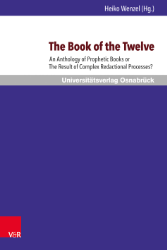
The Book of the Twelve
An Anthology of Prophetic Books or The Result of Complex Redactional Processes? …
An Anthology of Prophetic Books or The Result of Complex Redactional Processes? …